
 Español

Sol Spiegelman was a leading American molecular biologist whose work revolutionised our understanding of nucleic acids and their replication. Born in 1914, Spiegelman devoted his career to exploring the mechanisms of genetics and molecular biology, conducting groundbreaking research that has left a lasting impact on the field. His ability to combine theory with practical experiments made him a central figure in the advancement of molecular biology in the 20th century.
The experiment
Spiegelman’s Monster is the name given to a groundbreaking experiment carried out in the 1960s, where Spiegelman and his team succeeded in generating a 218-nucleotide RNA strand that could be replicated by a replication enzyme. This experiment used the bacteriophage RNA Qβ, a virus that infects bacteria and whose RNA can be replicated by the phage’s replicase enzyme Qβ.
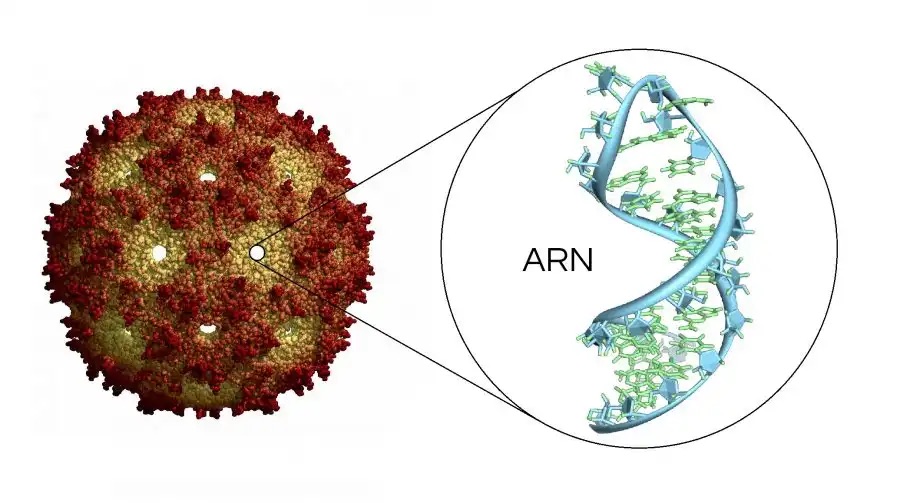
Spiegelman introduced the replicase enzyme along with the components necessary for RNA replication. Over time, the conditions of the experiment favoured the evolution of a shorter RNA strand of only 218 nucleotides, which was able to replicate more efficiently than the original strand.
This natural selection phenomenon in a replicating RNA system demonstrated that RNA molecules can evolve into more efficient forms under selective pressure. The “Spiegelman monster”, a small, highly replicating RNA molecule, is a testament to how biological molecules can adapt and evolve in response to their environment.
Impact on medicine
Spiegelman’s experiment not only deepened our understanding of RNA replication and molecular evolution, but also opened new doors in the field of biomedicine. The principles discovered through this work have been fundamental to the development of RNA technologies, including gene therapy and messenger RNA (mRNA) vaccines.
Spiegelman’s Monster remains a milestone in molecular biology, demonstrating the power of molecular evolution and RNA replication. Sol Spiegelman’s work not only illuminated the basic mechanisms of biology, but also laid the groundwork for medical innovations such as personalised medicine and the application of RNA-based therapies for the treatment of rare diseases.
Sources:
Dr. Spiegelman’s Monster – Science Explained
1×28: Spiegelman’s Monster – The Biology Hour
What is managed evolution? – The Panda’s Thumb